


Choosing Between Nano Brows and Microblading: Your Ultimate Guide

Updated: 17 hours ago
Brows can change the whole balance of a face. That’s why semi-permanent brow treatments have become so popular. The hard part is choosing the right one. Nano brows and microblading can both create fuller, more defined brows, but they use different tools, heal differently, and suit different skin types.
The best choice is not always the trendiest one. It comes down to your skin, your brow goals, your pain tolerance, and how you want your brows to age over time.

What Nano Brows and Microblading Have in Common
Both nano brows and microblading are forms of semi-permanent cosmetic tattooing. In both methods, a trained artist places pigment into the upper layers of the skin to make the brows look fuller, more shaped, or more symmetrical.
Both treatments usually involve:
A consultation and brow mapping
Numbing cream before the procedure
Custom pigment selection
A first appointment and a touch-up appointment
A healing period where the brows darken, flake, soften, and settle
Maintenance visits as the pigment fades
They can also both look natural when done well. A skilled artist studies your existing brow growth, facial structure, skin undertone, and long-term fade pattern before choosing a technique.
The biggest difference is how the pigment enters the skin.
How Microblading Works
Microblading is the older and more widely recognized technique. The artist uses a handheld tool fitted with a row of tiny needles. These needles form a blade-like edge, which the artist uses to create fine, hair-like strokes in the skin.
The tool does not vibrate or run on power. The artist controls each stroke by hand, applying pressure to make a shallow cut and deposit pigment.
The Tools Used in Microblading
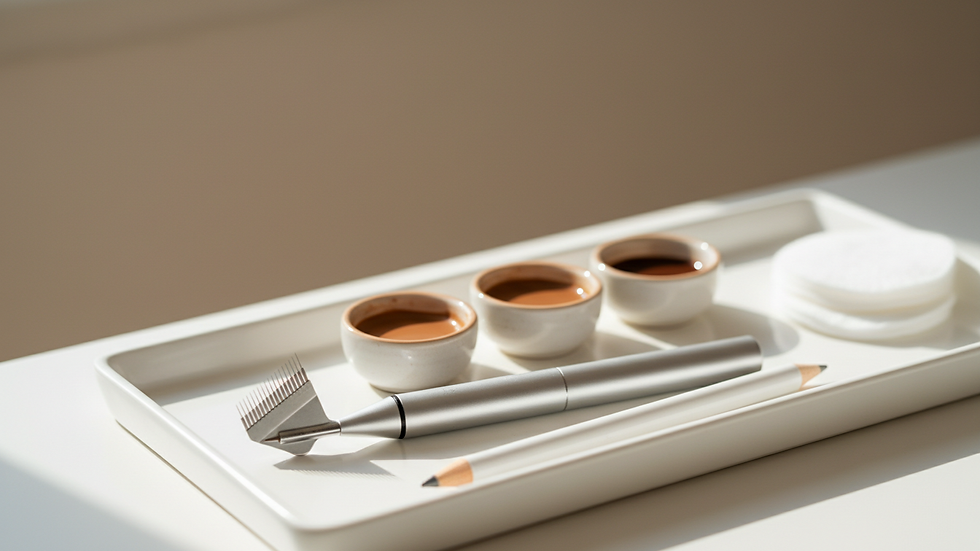
A typical microblading setup includes:
A manual microblading pen
Disposable needle blades in different sizes and shapes
Brow mapping string or pencil
Topical numbing cream
Pigment cups and sterile applicators
Aftercare products
Needle blades may be arranged in different ways. Some are angled, some are curved, and some are finer than others. The artist chooses the blade based on the client’s skin thickness, natural brow hair, and desired stroke pattern.
The Pigments Used in Microblading
Microblading pigments are made for cosmetic tattooing, not standard body tattooing. They are usually designed to fade gradually rather than stay bold forever.
Artists often use pigment blends with iron oxides, carbon-based ingredients, or inorganic colorants. A good artist does not simply pick “brown.” They look at:
Skin undertone
Natural brow hair color
Desired healed result
How the color may fade over time
Whether the client’s skin tends to heal cool, warm, gray, or reddish
Pigment choice matters. A color that looks perfect on the tray can heal too ashy or too warm if it is not matched properly.
What Microblading Looks Like
Microblading is known for crisp, realistic hair strokes. It can be beautiful on the right skin, especially when the natural brow already has some hair and the skin is normal to dry.
The best microblading does not look stamped on. It follows the direction of natural brow growth, with variation in length and spacing.
That said, microblading is less forgiving on some skin types. On oily or thick skin, the strokes can blur, spread, or fade faster.
How Nano Brows Work
Nano brows, sometimes called nano hairstrokes or machine hair-stroke brows, use a digital permanent makeup machine with a very fine needle cartridge. Instead of slicing the skin manually, the machine implants pigment with tiny, controlled needle movements.
The result can still mimic individual brow hairs, but the technique is different from microblading.

The Tools Used in Nano Brows
A nano brow setup usually includes:
A digital PMU machine
A fine needle cartridge, often a single needle
Pigments made for permanent makeup
Brow mapping tools
Numbing cream
Sterile disposable supplies
Aftercare products
The machine allows the artist to work with more consistent speed and depth. This can reduce unnecessary skin trauma when the artist is properly trained.
Nano brows require strong technical skill. The machine does not do the work for the artist. The artist still needs to understand pressure, stretch, needle angle, skin type, pigment behavior, and brow design.
The Pigments Used in Nano Brows
Nano brow pigments are also cosmetic tattoo pigments. The same color theory applies. Artists choose shades based on natural hair color, undertone, and desired healed result.
Because nano brows can last longer than microblading for many clients, pigment selection is especially important. A shade that heals too dark or too cool may be harder to correct later.
Some artists prefer inorganic pigments for their stability. Others use carefully balanced blends. The best choice depends on the technique, the client’s skin, and the artist’s product knowledge.
What Nano Brows Look Like
Nano brows can look extremely soft and natural. The strokes may appear a little airier or more delicate than traditional microblading, especially after healing.
Nano brows can also be combined with shading for clients who want more density. This is often called combination brows, but the exact name varies by studio.
Nano Brows vs. Microblading at a Glance
| Feature | Nano Brows | Microblading |
|--------------------------|-------------------------------------|-----------------------------------|
| Technique | Machine with fine needle | Manual tool with blade |
| Best for | Oily, mature, or delicate skin | Normal to dry skin |
| Healing | Softer, more natural | Crisp, defined strokes |
| Longevity | Longer-lasting | Shorter-lasting |
| Cost | Generally higher | Generally lower |
These time frames are general. Sun exposure, skincare products, skin type, immune response, pigment choice, and aftercare all affect how long brows last.
Benefits of Nano Brows
Nano brows have grown popular because they solve some of the problems clients have with microblading.
They Can Work Better on Oily Skin
Oily skin can cause microbladed strokes to soften or blur. Nano brows often hold their shape better because the pigment is implanted with a machine rather than placed through a manual cut.
This does not mean oily skin will heal exactly like dry skin. Oily skin may still fade faster than average, but nano brows often give artists more control.
They May Be Gentler on Mature or Delicate Skin
Mature skin can be thinner, more fragile, or less elastic. Microblading can sometimes be too harsh if the skin tears easily. Nano brows may be a better match because the machine places pigment with controlled needle movement instead of slicing strokes into the skin.
A seasoned cosmetic tattoo artist will often choose nano over microblading for clients with thin or crepey skin.
They Can Last Longer
Nano brows often last longer than microblading, especially when placed well and maintained with proper aftercare. Many clients return for color refresh appointments every couple of years, though some need maintenance sooner.
Longevity is a benefit only when the work is done well. Longer-lasting pigment also means poor color or shape may stay visible longer.
They Can Heal Softer
Nano brows tend to heal with a soft, refined look. This makes them appealing for people who want brows that look polished but not heavy.
Drawbacks of Nano Brows
Nano brows are not perfect for everyone.
They Can Cost More
Nano brow appointments often cost more than microblading because the technique requires a machine, cartridges, advanced training, and more time.
Pricing varies widely by artist and location. A low price should not be the main reason to choose any cosmetic tattoo service.
They Require Specialized Training
Not every microblading artist is trained in nano brows. Machine hair strokes are difficult. If an artist lacks experience, the strokes can look too dark, too deep, or too uniform.
Ask to see healed results, not just fresh photos. Fresh brow work almost always looks sharper than healed work.
They May Not Suit Very Bold Brow Goals on Their Own
Nano hairstrokes are great for natural fullness. If you want a makeup-like brow with more structure, shading or combination brows may be better.
Benefits of Microblading
Microblading remains popular for good reason. On the right candidate, it can create beautiful brows.
It Creates Crisp Hair-Like Strokes
Fresh microblading can look very fine and realistic. For someone with normal to dry skin and sparse areas, it can blend well with natural brow hair.
It Is Widely Available
Microblading is easier to find than nano brows in many areas. More artists offer it, which gives clients more appointment options.
That said, availability does not equal quality. Training, sanitation, experience, and healed results matter more than convenience.
It May Be a Good Fit for Subtle Enhancement
Microblading can be ideal for filling small gaps, improving symmetry, or adding light structure without a full makeup look.
People who already have decent brow hair often get the most natural result.
Drawbacks of Microblading
Microblading can look stunning at first, but it has limitations.
It Is Not Ideal for Every Skin Type
Microblading is often less suitable for:
Very oily skin
Large pores in the brow area
Very thin or mature skin
Skin that scars easily
Skin prone to keloids
Highly sensitive or reactive skin
On oily skin, crisp strokes may fade quickly or heal blurry. On fragile skin, the manual cutting motion can create more trauma than needed.
It May Fade Faster
Microblading often needs more frequent touch-ups than nano brows. For many clients, it lasts about a year to a year and a half before it needs refreshing.
Frequent touch-ups can build up pigment over time. If the artist repeatedly works over old strokes, the brows can eventually look more shaded or solid.
It Can Be More Uncomfortable for Some Clients
Pain is personal, but many people describe microblading as a scratching sensation. Numbing cream helps, but the manual cutting feeling can still be noticeable.
Some clients find nano brows more tolerable because the sensation feels more like light vibration or tiny tapping.
Pain Level and Healing Differences
Most clients describe both treatments as manageable, especially with numbing. Neither should feel unbearable when performed correctly.
A general comparison:
Microblading: Often feels scratchy or like light paper cuts. The sound of the blade can bother some clients as much as the sensation.
Nano brows: Often feels like vibration, buzzing, or tiny pinpricks. Some areas of the brow may feel more sensitive than others.
Healing is similar in broad stages. Brows usually look darker at first, then may flake and appear lighter before the color returns and settles. The surface may feel dry or tight for several days.
Do not pick flakes. Picking can pull pigment out and create patchy healing.
Common aftercare guidance includes avoiding heavy sweating, swimming, direct sun, exfoliating acids, and retinoids near the brows while they heal. Always follow the specific instructions from the artist, since products and techniques vary.
Which Brow Technique Suits Which Skin Type
Skin type is one of the biggest deciding factors.
Normal to Dry Skin
Both nano brows and microblading may work well. If the skin is firm, healthy, and not overly sensitive, microblading can heal crisp. Nano brows can also be a great option if the client wants a softer result or longer wear.
Oily or Combination Skin
Nano brows are often the stronger choice. Oil can push microbladed strokes to heal softer, thicker, or less defined. Machine work may hold better, though results still vary.
Mature Skin
Nano brows are often preferred for mature skin because they can be less traumatic. Microblading on thin or delicate skin requires extreme caution and may not be recommended.
Sensitive Skin
A consultation matters here. Sensitive skin may react to either technique. The artist may suggest nano brows, powder brows, or no procedure at all depending on the skin’s condition.
Skin with Previous Brow Tattooing
Neither technique may be the right first step if old pigment is still visible. The artist may recommend color correction, removal, shading, or waiting until the old pigment fades.
What Experienced Artists Often Recommend
Experienced cosmetic tattoo artists tend to focus less on trend names and more on skin behavior.
Many brow specialists prefer nano brows for oily, mature, or delicate skin because the machine allows more controlled pigment placement. For dry, resilient skin with natural brow hair, microblading can still be a beautiful choice.
Artists also stress the importance of healed photos. Fresh brows can look perfect on day one, then heal too cool, too thick, too light, or too patchy. Healed results show the artist’s real skill.
Client feedback also follows a pattern. People who choose microblading often love the crisp, fresh hair strokes and lighter commitment. People who choose nano brows often mention softer healing, better retention, and less worry about strokes blurring.
One common client takeaway after switching from microblading to nano brows is simple: the brows still look like brows after they heal, not like faded lines or soft smudges. That is not guaranteed for everyone, but it explains why nano techniques are gaining attention.

How to Choose Between Nano Brows and Microblading
Choose microblading if:
Your skin is normal to dry
You want crisp hair strokes
You have some natural brow hair to blend with
You understand it may need more frequent maintenance
Your artist can show strong healed results on similar skin
Choose nano brows if:
Your skin is oily, combination, mature, or delicate
You want soft, natural-looking hair strokes
You want longer-lasting results
You are comfortable choosing a newer, more specialized technique
Your artist is trained in machine hairstrokes
Before booking, ask these questions:
Can I see healed photos of your work?
Which technique do you recommend for my skin, and why?
What pigments do you use?
How do you prevent brows from healing gray, red, or too dark?
What is your touch-up process?
Do you use sterile, single-use needles or cartridges?
What should I avoid before and after the appointment?
The right artist should answer clearly and honestly. If every client gets the same technique, same shape, and same pigment, keep looking.
The Final Takeaway
Nano brows and microblading can both create beautiful results, but they are not interchangeable. Microblading uses a manual blade to create crisp strokes, and it often works best on normal to dry skin. Nano brows use a machine and fine needle cartridge to create soft hairstrokes, and they are often better for oily, mature, or sensitive skin.
If you want the safest path to a result you will still like months later, start with your skin type, not the trend. Then choose an artist who can explain their technique, show healed work, and customize the plan for your face.
The best brow technique is the one that heals well on your skin, fits your style, and ages gracefully.


Comments